Embrace the Beauty of Choumeriako
Experience the richness of a village steeped in history and architectural marvels.
Rich History
Choumeriako has a life of many centuries with a rich history as evidenced by the archaeological findings and monuments. In 1958 a clay sarcophagus, dated from the late Minoan III period, many clay vessels and pieces of bronze objects were found in the area of Choumeriakos, although they are not undeniable proof of the date of the foundation of the first settlement.
Venetians & Turks
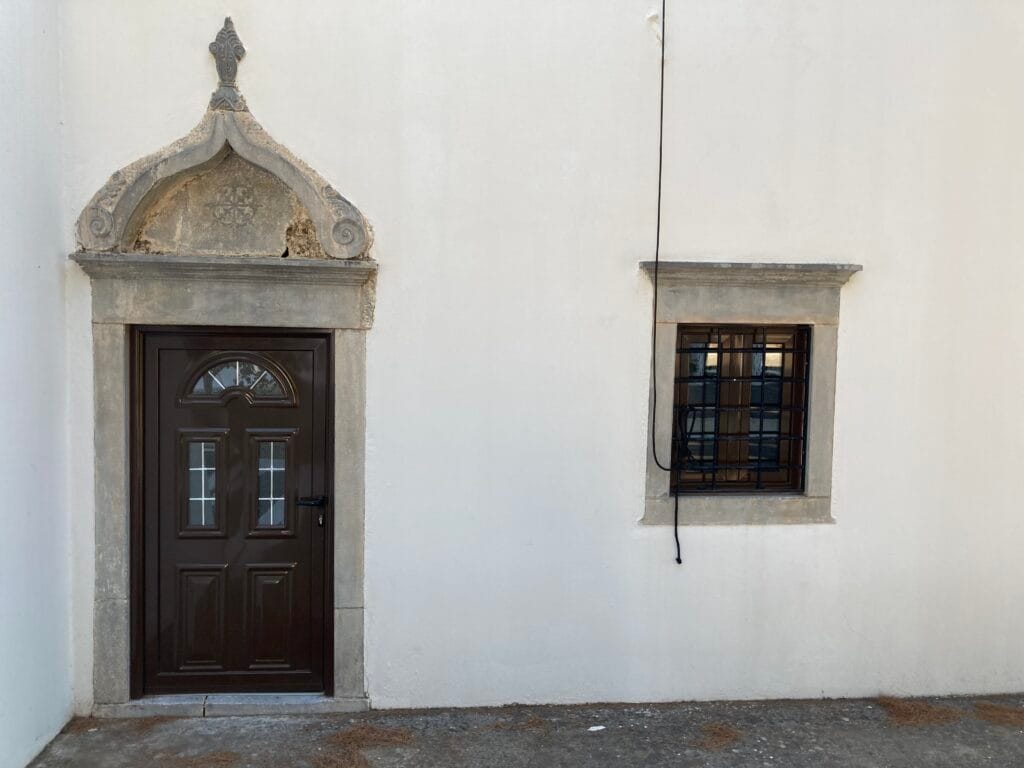
The Venetians chose it as the seat of an administrative office of Castellania or a residence of a wealthy feudal lord, as an impressive front door, the ‘Romana Portella’, testifies.
During this period the village flourished because of the productivity of the area and its location. It is referred to as the seat of three notaries.
During the Turkish occupation after 1669 it became the residence (the Serai) of the Turkish Agha. From many sources we know that during the Turkish occupation it was a den of genticism and a place of the brutal revengeful acts of the oppressed rajahs, the most known one being the story of the abduction of the Critsotopoula Rodanthi from Khursit-agha, of Captain Kazani with Alydakos, etc.
Landscape & Climate
The landscape of the Merabello area is evocative. Successive large mountain ranges dominate the environment. The climate of the area is characterised by mild winters with few with little rainfall and warm summers. The prevailing winds are from the north-west. The climate, together with the particular terrain of the village, has a special influence on the layout of the individual parts of the village. That is, while the settlement is densely built up and extends over four feet with three ‘folds’ between them (gullies), the building (especially the houses) gradually thins out from the centre towards the top of the mountain.
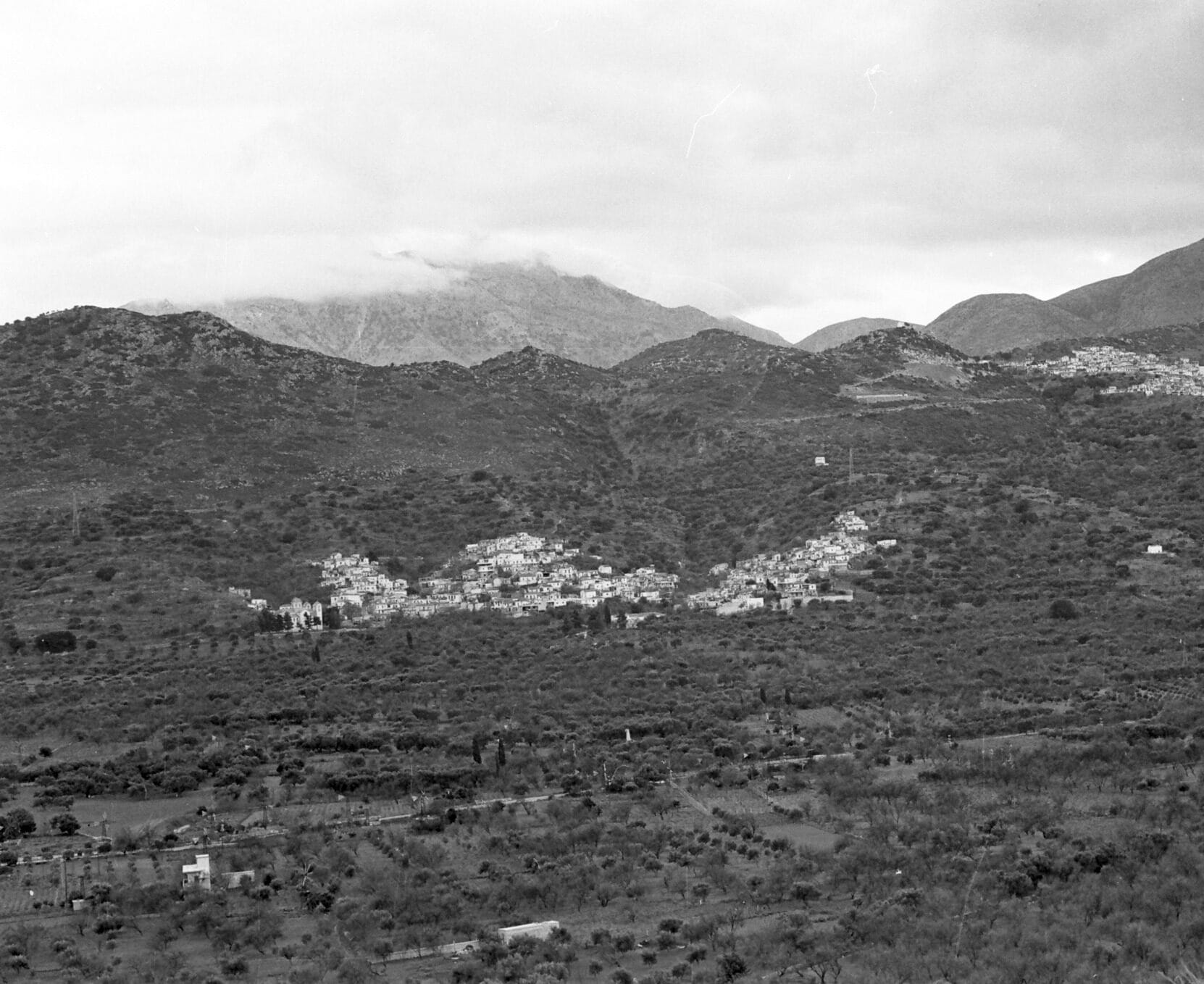
Choumeriako
Location
Choumeriako is part of a geographical cluster of villages such as Vrisses, Platypodi, Nikithiano and Lymnes. The fertile plain that stretches to the south of the settlement combined with the presence of water played a decisive role in the settlement of the area and the development of agriculture. Choumeriako is located in the verdant valley of Merambello, 2.7km east of Neapolis and 11.7km from Agios Nikolaos.
Its Routes
The village is certainly one of the oldest in the Merabello area of the
of Gares (Kares), as the Merabello tub was called during the Venetian occupation.
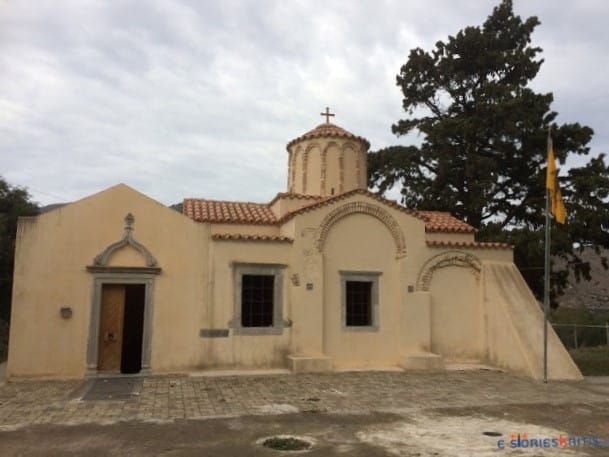
Its geographical position attracted the Byzantines, a fact attested by the abundance of Byzantine Christian monuments with frescoes, interesting architectural elements and architectural monuments, and cadastral inscriptions of 1580, 1584, etc. The phrase ‘Chorio Choumeriaco of the garros’ is also used in a document from 1640.
Economy & Products
The economy of the village was based
on agriculture and manufacturing. Mills were set up in many parts of the region, such as in Nikithiano, to convert the fruits of the cereals into flour. Corresponding mills and threshing floors existed on the eastern hill of Choumeriacos in the place name ‘Mili’, as we know and from testimonies. Also olive mills of the village, many of which were family-run, were the craft for milling the olive fruit for oil extraction. In the plain in the tree-lined areas almond trees dominated the tree crops in the valley until a few decades ago. Up until the decade there were 21 cafés lined up along the main road or in the upper neighbourhoods along with other shops. Technological developments, industrial production and standardization were the cause of the disappearance from the village of many of the trades of the time such as the samara, the shoemakers, tailors, carpenters, carpenters, carpenters, weavers and famous well-wishers. Today the agricultural production comes mainly from the cultivation of olives. There are still a few vineyards and orchards with citrus and vegetables.
Our Commitments
Our Mission
To preserve the heritage of Choumeriakos, nurture the community, and offer a glimpse into the past through our cultural endeavors.
Our Values
We uphold authenticity, sustainability, and community engagement as pillars of our identity.
Our Journey
Tracing Heritage Through Time
Choumeriakos has stood the test of time, with 17 ancient temples and architectural marvels. From the Byzantine era to Venetian and Ottoman influences, our history is a tapestry of cultural richness and resilience.
 English
  Ελληνικά